Pakistan Enters Development Phase After Economic Stabilisation: Finance Minister
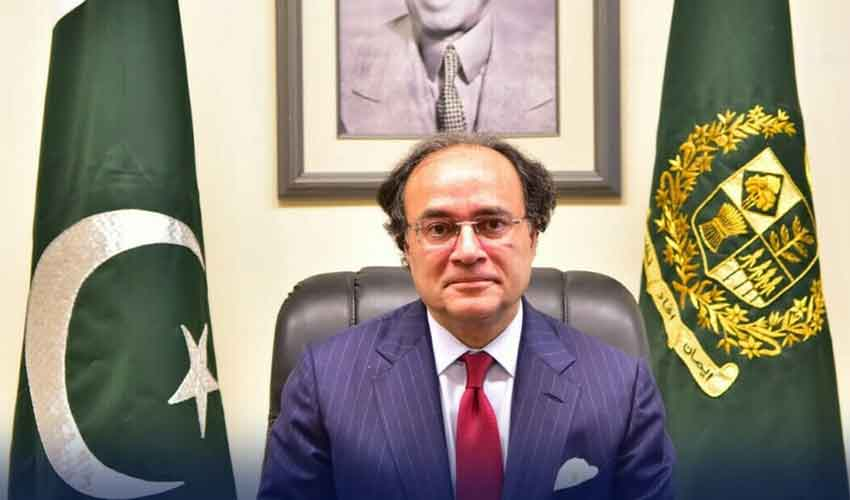
Pakistan has moved into a new phase of development after achieving economic stabilisation, Federal Finance Minister Muhammad Aurangzeb said, pointing to strong macroeconomic indicators and renewed investor confidence. In an interview with the American newspaper USA Today, the finance minister outlined how consistent reforms and disciplined policies have helped steady the economy and laid the groundwork for sustainable growth.
According to Aurangzeb, Pakistan has, for the first time in several years, recorded both a primary budget surplus and a current account surplus. He described this achievement as a major signal of improving economic fundamentals, reflecting better fiscal management and balance-of-payments discipline. These indicators, he said, show that the economy is no longer operating in crisis mode but is transitioning toward stability and expansion.
The finance minister highlighted a sharp decline in inflation as one of the most significant outcomes of recent reforms. Inflation, which had surged to nearly 38 percent at its peak, has now fallen to single digits. This reduction has eased pressure on households and businesses while restoring confidence among domestic and foreign investors. At the same time, Pakistan’s foreign exchange reserves have crossed the $14.5 billion mark, strengthening the country’s external position and reducing vulnerability to shocks.
Aurangzeb noted that the government is now focused on transforming Pakistan from a consumption-driven economy into one led by exports and productivity. He said export-led growth is essential for long-term stability and cited the IT sector as a clear example of progress. Pakistan’s IT exports have already exceeded $4 billion and are projected to double within the next five years, supported by policy incentives, human capital, and expanding global demand.
Structural reforms remain central to the government’s strategy. The finance minister said changes in taxation, the energy sector, and state-owned enterprises are underway to improve efficiency and reduce fiscal burdens. Privatization initiatives and tariff rationalization are also being pursued to enhance competitiveness and attract long-term investment. He referenced the World Bank’s “East Asia Moment” as a possible model for Pakistan’s own export-oriented development path.
Aurangzeb identified agriculture, mining, and the digital economy as key sectors offering strong investment potential. Modernizing agriculture through technology and infrastructure could significantly raise productivity. In mining, global interest is growing in Balochistan’s Tethyan and Reko Diq belts, particularly for copper and other strategic minerals. He also pointed to opportunities in data centers, artificial intelligence, and IT infrastructure as Pakistan expands its digital footprint.
The finance minister stressed that inclusive growth is critical, emphasizing women’s education and participation in the workforce as essential drivers of long-term economic progress. While expressing optimism, he also acknowledged climate change as a serious challenge, calling for international cooperation to address its economic and environmental impacts.
Overall, Aurangzeb said Pakistan’s reform momentum is creating a stable and predictable environment, positioning the country for sustained development, increased trade, and broader investment opportunities in the years ahead.