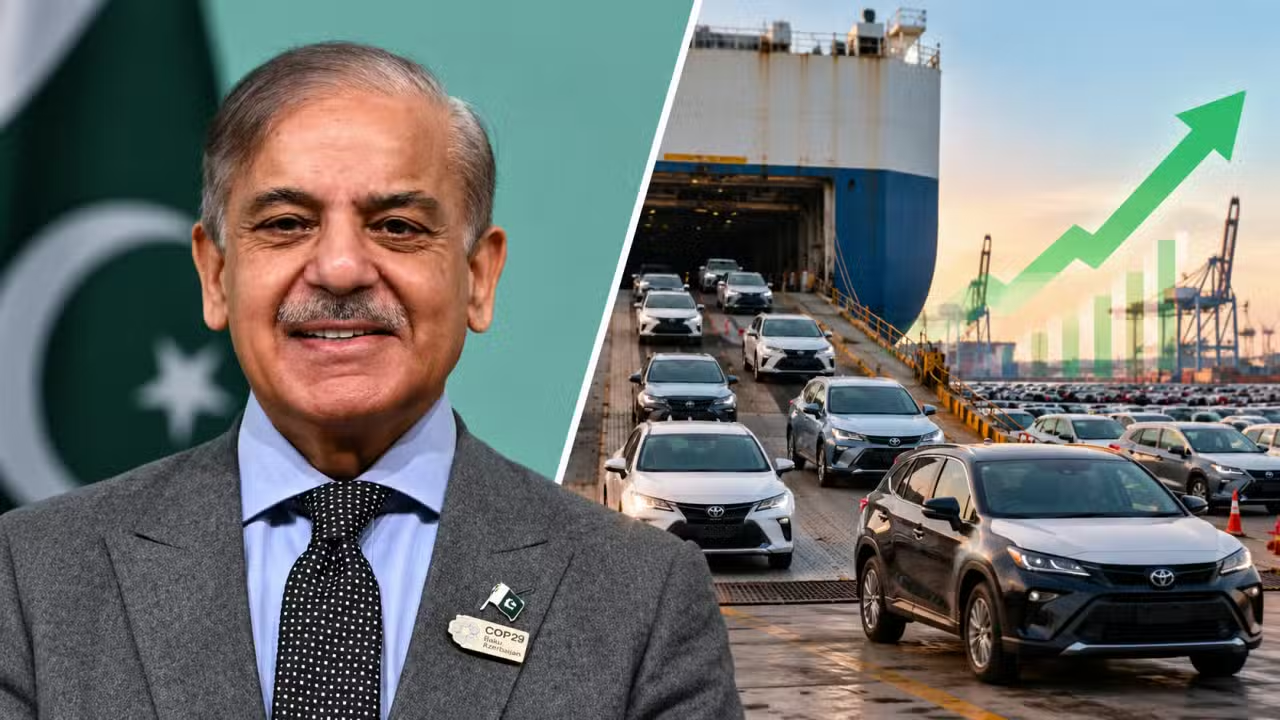
Prime Minister Shehbaz Sharif has convened a meeting to review Pakistan’s proposed automotive policy for 2026–31, with approval potentially expected today. According to sources cited by ProPakistani, the policy could receive the green light if the prime minister is satisfied with the proposed framework.
The proposed Automotive and Auto Parts Manufacturing Policy 2026–31 is designed to guide Pakistan’s automobile industry over the next five years. It is expected to provide a framework for the sector following the expiry of the previous policy on June 30, 2026.
The delay in finalizing the new policy has left automakers and consumers waiting for clarity on the government’s future direction for the automotive sector. Industry participants are looking for greater certainty regarding manufacturing, investment, and vehicle pricing.
According to the reported information, the prolonged delay has contributed to uncertainty among manufacturers, prompting some companies to postpone decisions related to production plans and vehicle prices.
The upcoming policy review could therefore be an important development for Pakistan’s automobile industry. Its approval would establish a new policy framework, although the actual impact would depend on the measures included in the final document and how they are implemented.
Pakistan’s automotive sector plays a role in manufacturing, employment, investment, and the wider supply chain. Vehicle assemblers and auto parts manufacturers depend on clear regulations and predictable policies when planning production, sourcing components, and making long-term investment decisions.
For consumers, the new policy could also be significant. Government decisions affecting local manufacturing, imports, competition, and the auto parts industry can influence vehicle availability and prices. However, the specific effects will depend on the final policy provisions, and no immediate change in vehicle prices can be confirmed from the available information.
The proposed Automotive and Auto Parts Manufacturing Policy 2026–31 is expected to shape the operating environment for manufacturers over the coming years. Industry stakeholders will be watching for details about the government’s approach to local production, investment, and the development of Pakistan’s auto parts manufacturing base.
The prime minister’s review is the next reported step in the policy process. Approval remains conditional on his satisfaction with the proposed framework, according to the sources cited by ProPakistani.
Until an official announcement is issued, the policy should be treated as a proposal awaiting a decision rather than a finalized government measure. Further details about its provisions and implementation timeline will be important for automakers, auto parts suppliers, and consumers across Pakistan.