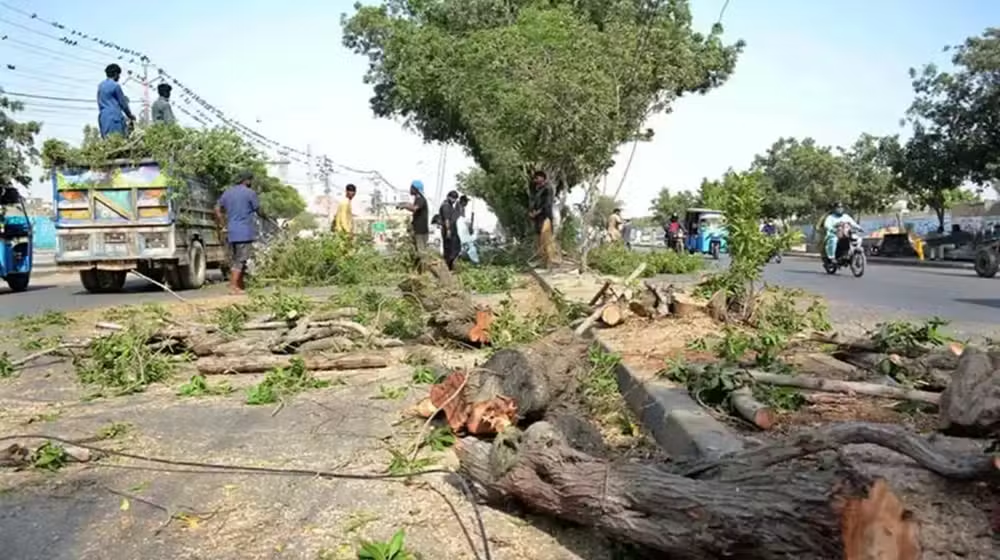
Climate Ministry Defends Removal of Paper Mulberry Trees in Islamabad
Pakistan’s Ministry of Climate Change has informed the Islamabad High Court (IHC) that paper mulberry trees are categorized as a non-native species, making their removal legally permissible under current environmental guidelines.
The clarification came in a written reply submitted during ongoing court proceedings concerning tree cutting activities in the federal capital. The case has drawn public attention amid concerns over urban greenery and environmental conservation in Islamabad.
According to the ministry’s response, paper mulberry trees were introduced species and are not indigenous to the region. Officials argued that the management or removal of non-native plants is often part of broader ecological planning, particularly when such species affect native biodiversity or urban infrastructure.
Paper mulberry has long been a subject of environmental debate in Islamabad. Experts have previously linked the species to seasonal pollen allergies, which impact residents during specific times of the year. Authorities have, at various points, initiated controlled removal drives to address both health and environmental considerations.
The ministry’s statement emphasized that any tree management activity is conducted within the framework of relevant environmental policies and regulations. The submission aims to clarify the legal basis for removing certain species while maintaining overall commitments to afforestation and climate resilience.
Environmental advocates, however, continue to stress the importance of transparent urban forestry policies. They argue that while non-native species management may be justified, authorities must ensure that removal efforts are accompanied by adequate replantation of suitable native trees.
Islamabad has often been recognized for its green spaces and tree-lined avenues. As urban development expands, balancing infrastructure needs with environmental preservation remains a sensitive issue. The outcome of the ongoing case may further define how non-native species are handled in the capital.
The ministry’s defense before the IHC highlights the complexities of urban ecosystem management. It underscores the broader challenge of maintaining biodiversity, addressing public health concerns, and sustaining green cover in a rapidly developing city.