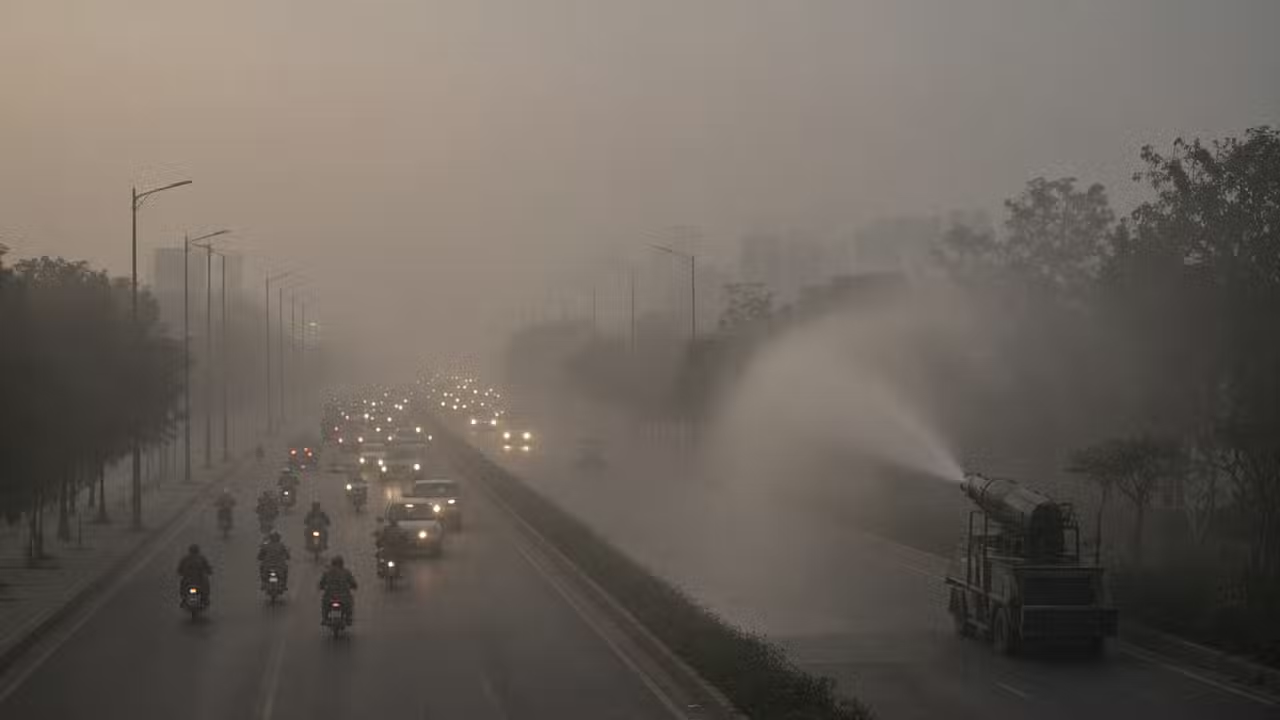
The Punjab government has warned that air pollution in Lahore and other parts of the province could intensify following large-scale Diwali fireworks in neighbouring India. Authorities fear that smoke and fine particulate matter released during the celebrations could add to the region’s existing pollution burden and contribute to thicker smog over the coming days.
Senior Punjab Minister Marriyum Aurangzeb has highlighted the potential impact of cross-border pollution, warning that changing weather conditions and polluted air moving across the region could further deteriorate Lahore’s Air Quality Index (AQI).
In a statement shared on social media platform X, the minister explained that a dense layer of fog and polluted air originating from the Bay of Bengal region was already affecting the wider area. She said wind direction, speed and atmospheric stability would play an important role in determining pollution levels in Lahore.
The minister noted that fireworks during Diwali celebrations could release additional fine particles into the atmosphere. When combined with existing pollution and unfavourable weather conditions, these emissions could increase the risk of severe smog across Punjab.
The provincial government has already accelerated its anti-smog measures in response to the developing situation. According to Marriyum Aurangzeb, Chief Minister Maryam Nawaz Sharif has directed relevant departments to strengthen pollution monitoring and intensify operations in areas vulnerable to deteriorating air quality.
Authorities have increased the deployment of smog guns and water-sprinkling operations in potential high-AQI locations, particularly along Punjab’s eastern corridor near the Indian border. These measures are intended to address pollution hotspots and reduce dust and airborne particles in affected areas.
However, the minister has also stressed that controlling pollution requires cooperation from the public. She urged residents, farmers and businesses to avoid activities that contribute to poor air quality, particularly during the period when regional pollution levels could increase.
Farmers have been specifically advised against burning agricultural waste, especially rice stubble left behind after harvesting. Crop-residue burning releases smoke and fine particulate matter, which can contribute significantly to seasonal air pollution.
The government has also called for strict enforcement of the existing ban on open burning of garbage, plastic and other waste materials. Residents have been asked to avoid burning rubbish in streets, residential areas and open spaces.
Vehicle emissions remain another major concern as winter smog continues to affect Punjab. Marriyum Aurangzeb urged motorists not to bring heavily smoke-emitting vehicles onto roads in the coming days and encouraged people to avoid unnecessary travel.
She also emphasised the importance of enforcing vehicle fitness and emission standards to reduce harmful pollutants released by transportation.
According to figures shared by the provincial department, Pakistan recorded 459 crop-burning incidents between October 1 and November 4 this year. This represents a 28 percent decrease compared with 637 incidents reported during the corresponding period last year.
Despite the reduction, authorities are continuing enforcement efforts to prevent agricultural fires and discourage activities that worsen air pollution. The department also reported that 57 first information reports (FIRs) were registered in connection with crop burning between October 1 and November 2.
Environmental Protection Agency (EPA) teams are reportedly conducting round-the-clock monitoring across Punjab, including nighttime operations to identify violations and respond to pollution-related incidents.
The latest warning highlights the regional nature of the smog problem affecting Lahore and neighbouring areas. Air pollution does not remain confined within administrative or national borders, as wind patterns can transport smoke and airborne particles across large geographical distances.
At the same time, local emissions from vehicles, industries, agricultural fires and waste burning continue to contribute to Punjab’s air quality challenges. Weather conditions, particularly weak winds and atmospheric stability, can also influence how quickly pollutants disperse.
Residents have been encouraged to follow official air-quality updates and take precautions when pollution levels become unhealthy. Limiting unnecessary outdoor activities during severe smog and reducing personal contributions to pollution can help lower exposure and support broader efforts to improve air quality.
With Diwali-related emissions adding to existing regional concerns, Punjab authorities are increasing monitoring and anti-smog operations while urging citizens to play their part in controlling local pollution sources.