Gilgit-Baltistan Launches New Climate and Agriculture Initiatives with EU Support
Gilgit-Baltistan has launched two major policy initiatives aimed at addressing climate change, protecting natural resources and transforming the region’s agriculture sector with support from the European Union (EU).
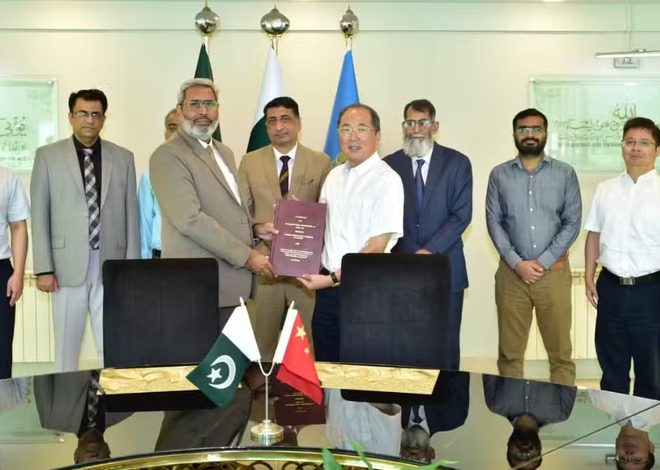
EU Ambassador to Pakistan Raimundas Karoblis launched the region’s first Gilgit-Baltistan Carbon Strategy and Action Plan as well as the proposed Agriculture Policy and Action Plan 2027–2036. The initiatives are designed to support sustainable development and improve the resilience of communities facing increasing climate-related challenges.
The launch of the Carbon Strategy took place at the Gilgit Secretariat Complex, where government officials and representatives of the EU Policy Support Project discussed the strategy’s objectives and implementation priorities.
Ambassador Karoblis said that tackling climate change, protecting the environment and promoting sustainable economic development in Gilgit-Baltistan are among the EU’s key priorities. He also indicated that the EU intends to expand technical and financial cooperation with the regional government during the implementation phase.
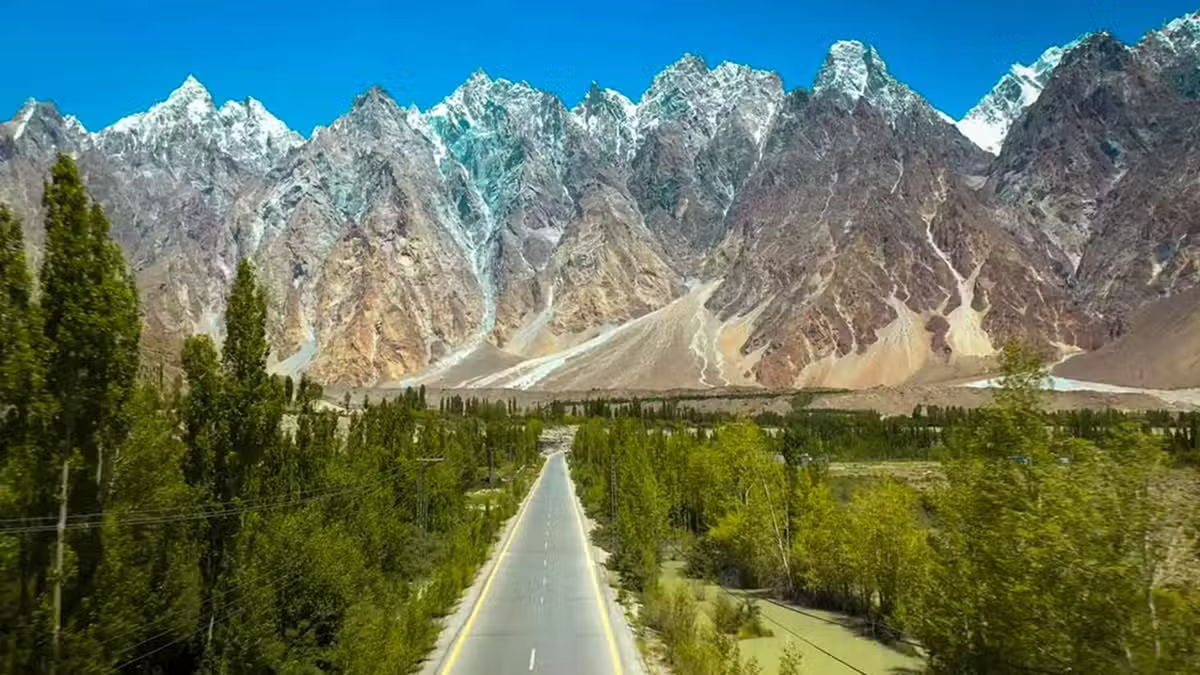
The Carbon Strategy seeks to move Gilgit-Baltistan toward a low-carbon and climate-resilient mountain economy. The region faces growing environmental risks, including glacier melt, floods and landslides, which can affect communities, infrastructure, agriculture and biodiversity.
According to the baseline assessment presented during the launch, Gilgit-Baltistan produces an estimated 1.123 million tonnes of greenhouse gas emissions annually, measured in carbon dioxide equivalent. Fuelwood consumption and road transportation together account for approximately 84.2 percent of the region’s gross emissions.
The strategy proposes reducing reliance on fuelwood by promoting cleaner cooking and heating technologies. It also focuses on more efficient biomass use, electric vehicles, cleaner transportation and greater adoption of hydropower and solar energy.
Another important proposal is the establishment of a GB Carbon Cell. The proposed institution would strengthen carbon governance, monitoring, reporting and verification while helping Gilgit-Baltistan access international climate finance and participate in emerging carbon markets.
The strategy also proposes a Climate Observatory to improve monitoring of climate and environmental impacts associated with development activities. Community participation is another component, with the plan emphasizing fair involvement in benefits generated through carbon finance and carbon credits.
Alongside the climate initiative, the proposed Agriculture Policy and Action Plan 2027–2036 aims to modernize agriculture and strengthen its contribution to employment, livelihoods and economic development.
The policy identifies fragmented landholdings, limited access to modern farming facilities and inadequate post-harvest infrastructure as major challenges for the agricultural sector. These issues contribute to significant losses in fruit production, with overall losses estimated at around 23 percent.
The proposed policy places particular emphasis on improving value chains, expanding cold-storage and processing facilities and connecting farmers with domestic and international markets.
It also promotes organic farming, carbon farming and climate-smart agriculture as potential approaches for improving sustainability while helping farmers adapt to changing environmental conditions.
The agriculture action plan is divided into three phases. The Foundation Phase will cover 2027–2029, followed by an Expansion Phase from 2030–2032 and a Consolidation Phase from 2033–2036.
Among the proposed priorities are stronger farmers’ cooperatives, improved productivity, expanded processing capacity, better cold-chain infrastructure and increased access to markets.
The two initiatives reflect an effort to link environmental protection with economic development in one of Pakistan’s most environmentally sensitive regions.
Successful implementation will depend on coordination between the Gilgit-Baltistan government, local communities, farmers, technical institutions and international partners. The policies provide a framework, while their long-term impact will depend on funding, institutional capacity and effective implementation.
For Gilgit-Baltistan, the combination of climate action and agricultural modernization could also become increasingly important as communities deal with environmental changes while seeking new opportunities for sustainable economic growth.