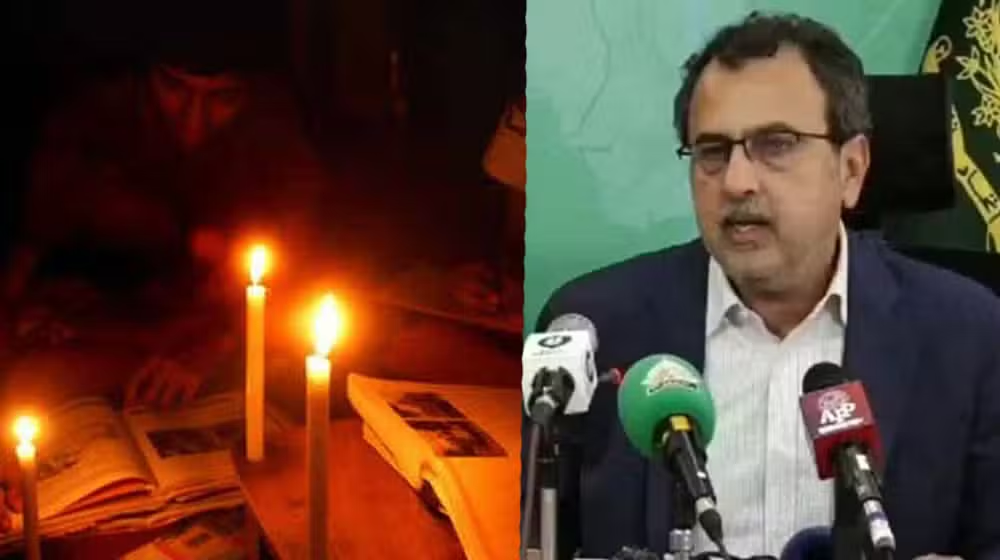
Federal Minister for Power Awais Ahmad Khan Leghari has announced that electricity loadshedding will begin to ease from tonight, offering partial relief to consumers across the country. The statement comes despite Pakistan continuing to face a significant power shortfall of nearly 4,000 megawatts.
The minister expressed regret over the inconvenience caused by prolonged power outages and acknowledged public frustration. He stated that the government has consistently worked to improve electricity supply and stabilize the energy situation.
According to the latest update, electricity availability is expected to improve compared to the previous day, with gradual reductions in loadshedding hours in various regions. However, officials clarified that the overall power gap remains a challenge for the national grid.
The minister also confirmed that no loadshedding is currently being conducted in Hyderabad, while consumers of K-Electric are not facing scheduled outages under the present arrangement.
In addition, K-Electric is reportedly drawing around 2,100 megawatts from the national grid to meet the electricity demand in Karachi. This reflects ongoing efforts to balance urban consumption needs with available generation capacity.
Despite the announced relief, experts note that structural issues in Pakistan’s energy sector continue to contribute to recurring shortages. These include fuel supply constraints, transmission losses, and rising demand during peak hours.
The government has reiterated its commitment to long-term energy reforms, including improved distribution efficiency and increased reliance on diversified energy sources. Renewable energy expansion and infrastructure upgrades remain key components of the broader strategy to reduce dependence on costly generation methods.
For consumers, the announcement offers short-term relief but also highlights the persistent volatility of the country’s power supply situation. Any sustained improvement will depend on managing the supply-demand gap more effectively in the coming months.