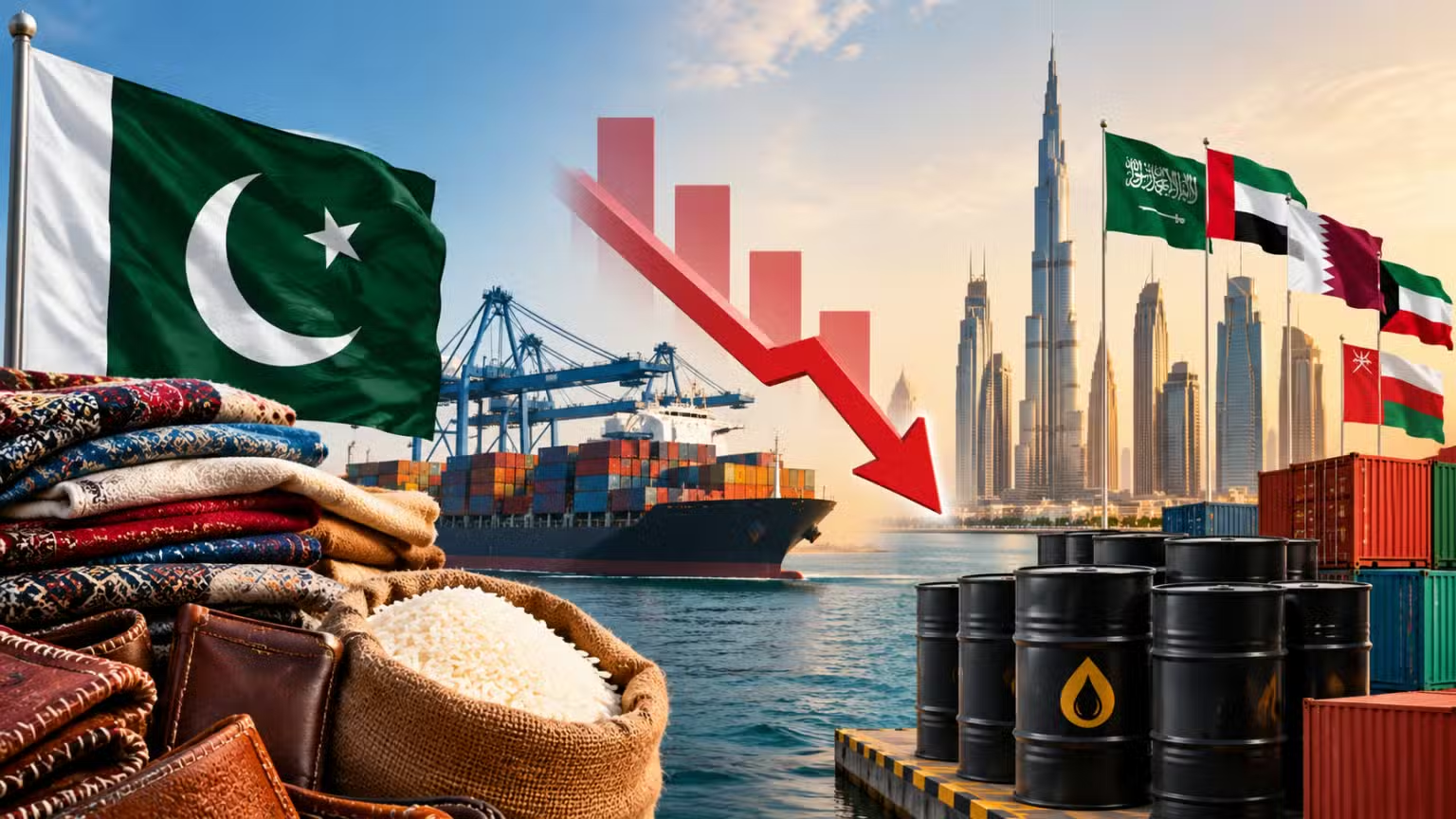
Pakistan’s trade deficit with six Gulf countries recorded a sharp decline in July, falling by 46 percent compared with the same month last year, according to data from the State Bank of Pakistan.
The trade gap with Saudi Arabia, the United Arab Emirates, Kuwait, Bahrain, Qatar and Oman stood at approximately $750.5 million in July.
This represents a significant reduction from the roughly $1.4 billion trade deficit recorded with the same Gulf countries during July last year.
The major factor behind the decline was a substantial decrease in imports from the Gulf region. Lower imports reduced the difference between the value of goods Pakistan purchased and the value of goods it exported to these markets.
The six Gulf states are important trading partners for Pakistan and have strong economic links with the country. Saudi Arabia and the UAE, in particular, play a significant role in Pakistan’s trade, investment and broader economic relationship with the Gulf.
A lower trade deficit can help reduce pressure on Pakistan’s external account, particularly when the improvement is driven by lower import demand. However, the long-term impact will also depend on whether Pakistan can increase exports to Gulf markets.
Pakistan has been seeking to strengthen trade relations with Gulf countries by expanding exports and attracting investment. The region remains an important destination for Pakistani products, including textiles, food products, rice, leather goods and other manufactured items.
The latest figures also highlight the changing dynamics of Pakistan’s trade with the Gulf. While imports declined sharply, increasing exports remains an important challenge for achieving a more balanced trading relationship.
A sustained improvement in the trade balance could support Pakistan’s efforts to manage its external financing requirements. It could also reduce the need for foreign exchange to cover a large gap between imports and exports.
The State Bank data provides an important indicator of Pakistan’s trade position with some of its key regional partners. Changes in import and export flows can also reflect domestic demand, international prices, currency movements and broader economic conditions.
The Gulf region is strategically important for Pakistan beyond merchandise trade. Millions of Pakistanis work in Gulf countries, while the region is also a major source of remittances for the Pakistani economy.
Stronger commercial ties with Gulf countries could therefore provide Pakistan with opportunities in both trade and investment. Expanding exports while encouraging investment could help deepen economic cooperation over the longer term.
The 46 percent decline in the Pakistan-Gulf trade deficit in July is a notable change from the previous year. Whether the improvement continues will depend on future import trends, export performance and the broader economic relationship between Pakistan and the six Gulf countries.